

Modernize your existing BMS without replacing it
Connect to your current BMS and building systems to detect faults early, cut HVAC waste, and turn alarms into clear actions, with AI-assisted diagnostics, prioritization, and recommendations, remotely and securely, with optional safe control when you are ready.
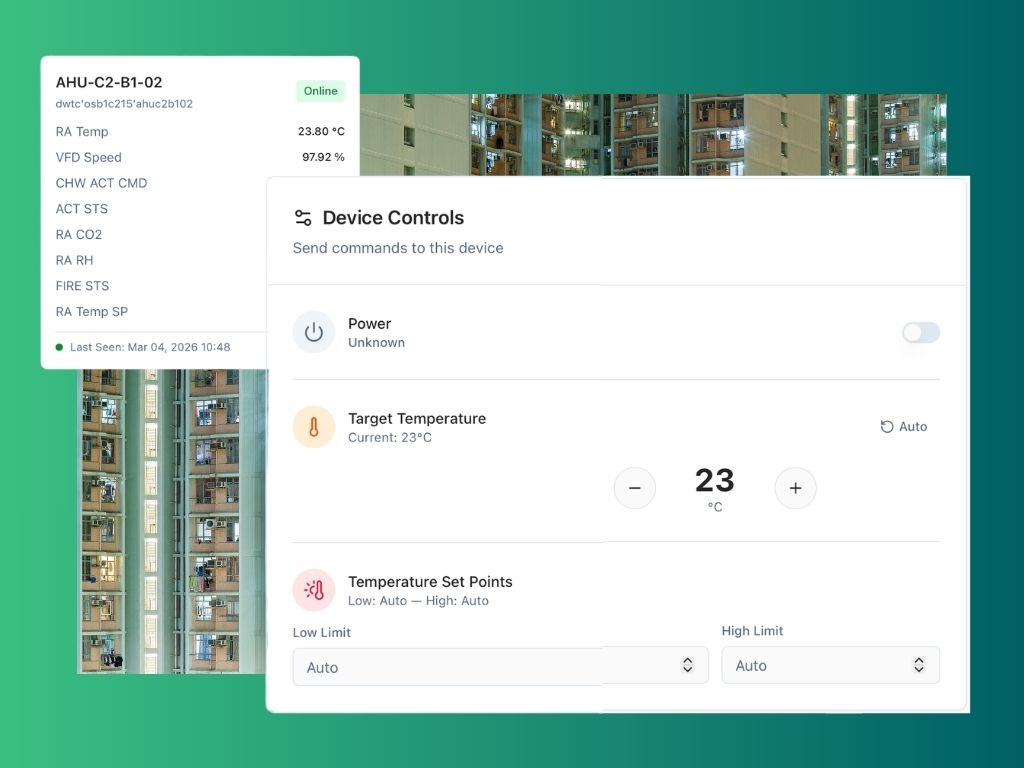
Stop running the building through complaints

Most buildings do not fail loudly, they drift. Schedules creep, setpoints conflict, sensors drift, and valves stick. Cloud BMS uses rules plus AI-assisted diagnostics to spot issues early, highlight likely causes, and recommend the next best action.










What Cloud BMS delivers
Fault detection
Detect faults and performance drift early with evidence, plus AI-assisted diagnostics that highlight likely causes.
Actionable alarms
Reduce alarm noise with smart grouping and prioritization, then assign follow-up fast.
HVAC waste detection
Catch schedule drift, after-hours runtime, and setpoint conflicts, with recommendations to correct them.
Remote diagnostics
Troubleshoot remotely with trends, context, and AI-assisted incident summaries for faster handoff.
Reporting
Auto-generate consistent reports for energy, comfort, and IAQ, including concise AI-generated highlights and exceptions.
Integrations
Send issues to CMMS or ticketing with auto-filled context so work orders are clearer.


How it connects
Works with existing BMS
Connect to your current controls and keep your BMS as-is.
On-site secure connector
Use outbound encrypted connectivity with site identity and access controls.
Clean, structured data
Normalize units, tags, and equipment relationships for reliable analytics.
Reliable history
Buffer locally and sync when connectivity drops so data is not lost.
Analytics engine
Run rules, diagnostics, and anomaly detection tuned for building operations.
Device-level analytics
Chillers
Track efficiency and stability to spot drift, cycling, and delta-T issues early.
AHUs
Detect economizer faults, unstable supply air control, and heat-cool conflicts.
Pumps
Flag overpumping, poor staging, and unstable differential pressure control.
FCUs
Identify comfort drift, valve or fan issues, and schedules running off-hours.
VAVs
Catch airflow and ventilation problems, damper hunting, and reheat waste.

Case Study
Cloud BMS analytics for a multi-floor office campus
The project involved a large-scale office campus where cooling performance is critical to operational productivity. By layering Cloud BMS analytics over the existing infrastructure, the facility team transitioned from a reactive, complaint-based model to proactive performance management. The implementation focused on converting raw BMS points into actionable device-level diagnostics. This approach optimized chiller Delta T health, AHU stability, and pump pressure behavior without hardware replacement.
-
13% reduction in HVAC electricity consumption
-
21% reduction in after-hours runtime
-
32% faster diagnosis for recurring HVAC issues
-
18% fewer comfort-related service tickets