

HVAC control, without a BMS
Sensgreen Wireless BMS retrofits Split ACs, FCUs, radiators, VRF systems, and sockets using LoRaWAN devices and gateways, so you can standardize schedules, stabilize comfort, and eliminate after-hours waste with minimal disruption.
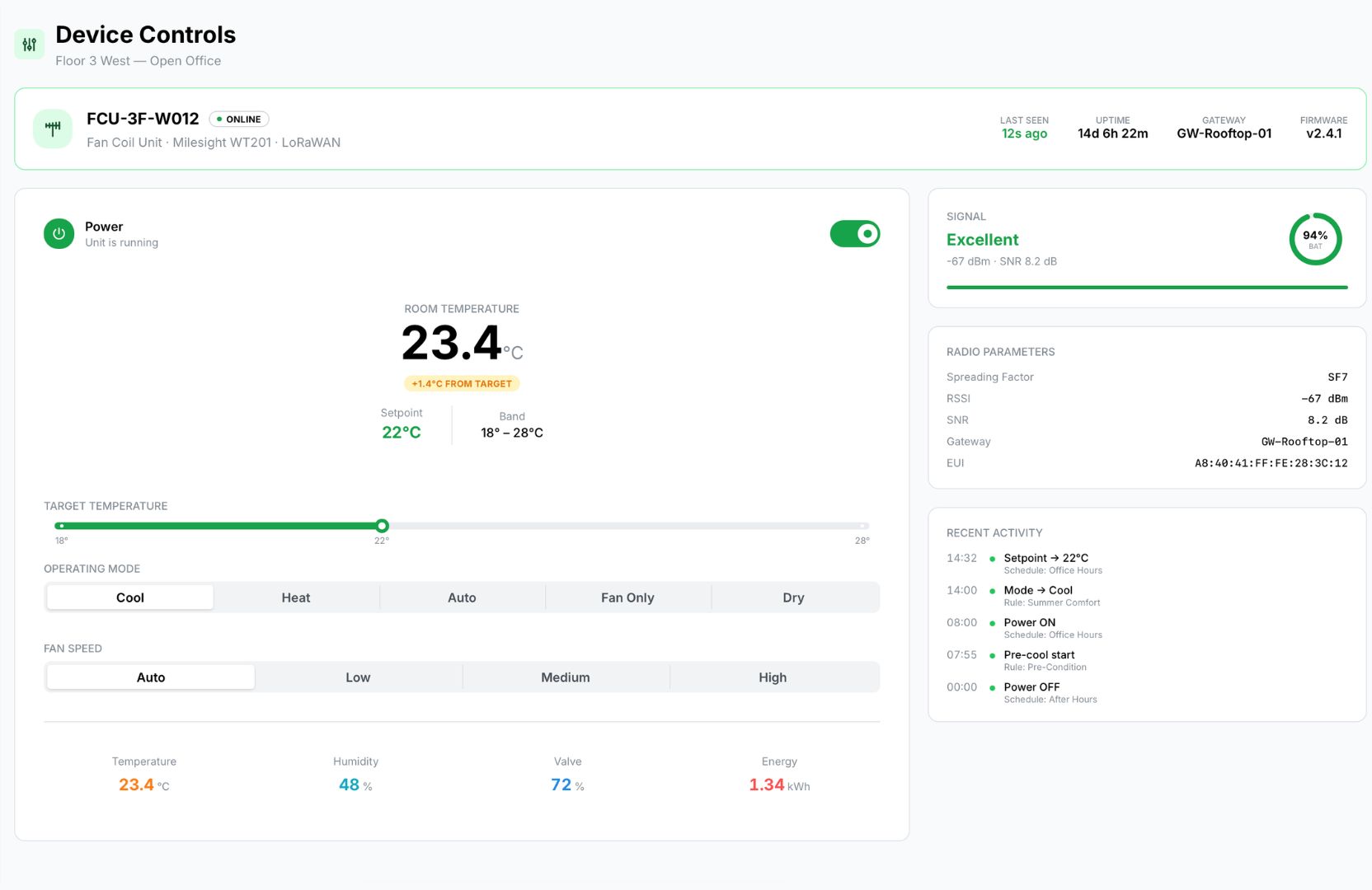
Bring BMS-level control fast by unifying multi-vendor  devices and sensors into one coordinated HVAC operating layer, with no rewiring.

After-hours waste is real
In buildings run by remotes and manual routines, it is common to find 10 to 30% avoidable after-hours HVAC runtime.
Traditional BMS retrofits are slow Results
A typical wired BMS retrofit can take 12 to 36 weeks once design, cabling, access coordination, and commissioning are included.
Wireless delivers value faster
A first area can typically go live in 5 to 15 business days, then expand floor by floor.











What Wireless BMS delivers
Central control without rewiring
Add BMS-like control capabilities without cabling and without replacing existing equipment.
Schedules that actually stick
Standardize operating hours and prevent schedule drift across zones and tenants.
Setpoints with governance
Define comfort bands, reduce random overrides, and keep operation consistent.
Wireless sensor driven control
Easily add wireless window, occupancy, IAQ, and outdoor weather sensors, then use those signals to avoid conditioning empty spaces and react to real conditions.
Measurable runtime reduction
Cut after-hours operation and track where waste returns through clear exceptions.
Operational visibility with AI-assisted insights
See what is running and why, highlight the highest-impact zones, and get suggestions for schedule improvements based on real usage patterns.


What you can do with Wireless BMS
After-hours shutdown
Automatically stop HVAC and sockets outside operating hours and flag exceptions.
Zone scheduling by tenant or floor
Run different schedules per area without manual daily changes.
Setpoint governance
Keep comfort within approved bands and track overrides.
Peak and high-load protection
Reduce avoidable runtime during high-load periods using simple rules.
Holiday and event modes
Apply special schedules instantly across selected zones.
Controlled assets
Split AC, LoRaWAN
Central scheduling, setpoints, modes, and runtime visibility.
Radiator valves, LoRaWAN
Room-level heating control for stable comfort.
FCU thermostats, LoRaWAN
Setpoints and fan control for better zone consistency.
VRF indoor and outdoor units, protocol converter gateway
Unified control and visibility through gateway integration.
Sockets, LoRaWAN
Schedule plug loads to reduce avoidable after-hours consumption.

Most buildings were never built for a full BMS. That should not block modern control. In many sites, HVAC is still managed room by room. Systems start early, run late, and drift over time. Comfort becomes reactive, and energy waste becomes normal. Wireless BMS changes the operating model quickly by giving you centralized schedules, controlled setpoint ranges, and exception alerts, without rewiring or invasive works.
Case Study
Smart Split AC control for a Davao City office
The project focused on a high-density office facility in Davao City, Philippines, where managing 150 individual split AC units manually was leading to significant energy waste and inconsistent cooling. By integrating Sensgreen Smart AC Controllers, the facility team transitioned from manual remote handling to a centralized, API-driven management model. This implementation enabled automated cooling schedules and real-time adjustments based on occupancy, optimizing thermal comfort without infrastructure overhauls.
-
12% reduction in overall energy consumption
-
6,000 hours less AC run time each month
-
40% faster maintenance response via remote diagnostics
-
Unified control of 150 units from a single dashboard