

Over the last year, a pattern has repeated across very different building types we touch every week: hotels that live and die by guest comfort, retail sites where operations teams are stretched thin, and multi-asset portfolios where “one more dashboard” doesn’t fix the real problem.
Most teams don’t wake up wanting a “smarter building.” They wake up wanting fewer comfort complaints, fewer reactive callouts, and energy costs that stop surprising them. The tech that wins is the tech that quietly removes friction from daily operations.
That’s why 2026 is shaping up to be the year where smart buildings become less about dashboards and more about autonomous operations, wireless retrofits, and AI that triggers action, not just insights. The industry language is already moving in that direction, with major players explicitly framing the next step as autonomy at scale (for example, collaborations positioned around “autonomous operations” rather than classic automation).
The Shift: Why Automation is No Longer Enough
From “more data” to “fewer decisions humans have to make”
In real buildings, the biggest operational gap is rarely the absence of data. It’s the human loop. Too many alarms arrive without context. Issues surface as comfort complaints first, and root cause later. Controls exist, but they’re often not tuned to the building’s actual rhythm: occupancy patterns, weather swings, and the way the site is really operated.
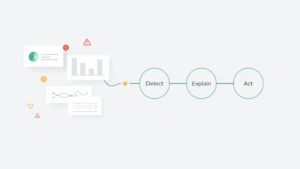
This is the year AI stops being judged by how clever the chart looks, and starts being judged by whether it reduces the time between “something feels off” and “we fixed it.” We’ve seen how quickly trust improves when this becomes the default workflow: operators stop arguing with the data and start using it, because the system explains why it thinks something is wrong and what to do next. That “explain + recommend + document” loop is also why large vendors are increasingly packaging AI as a unified operations layer rather than a collection of point tools.
The alarm economy is collapsing, and that’s a good thing
If 2025 taught the market anything, it’s that “more alarms” does not equal “more control.” In many sites, alarm volumes rise faster than teams can absorb them, so the building drifts into a strange equilibrium: everyone knows the alerts are noisy, everyone ignores them, and the same issues repeat.
In 2026, the baseline expectation will shift toward AI triage: deduplicate, group, and escalate only what matters. This isn’t flashy, but it’s where real operational ROI lives. The teams who win won’t be the ones with the most sophisticated anomaly detection model. They’ll be the ones that turn detection into a clean incident workflow: what happened, what likely caused it, what to check first, and what to change safely.

The Infrastructure of Autonomy: Wireless and Middleware
Wireless BMS is turning “smart buildings” into a retrofit story
There’s a practical truth behind a lot of the market momentum: a huge share of buildings still don’t have a modern BMS, or they have fragmented subsystems with limited visibility. Rip-and-replace projects are often too slow, too disruptive, and too hard to standardize across portfolios.
This is where Wireless BMS becomes less of a niche and more of a default starting point. Start with sensing. Build a reliable data layer. Prove value. Then expand into targeted control where it makes sense.
From our side, we’ve learned that the “portfolio mindset” changes everything. When you’re scaling across dozens of buildings, success is not about tuning one site perfectly. It’s about building a repeatable method: consistent data quality, consistent naming and structure, consistent operational insights. And once the wireless layer is there, AI becomes dramatically more useful. Not because AI magically “gets smarter,” but because the dataset becomes more complete and comparable across sites.
Connectivity upgrades are quietly improving the economics of sensing at scale
Retrofit programs live or die on details that sound boring in slide decks: battery life, maintenance cycles, network capacity, and reliability under real conditions.
That’s why LPWAN improvements matter. Updates like the LoRaWAN regional parameters refresh are signals that networks can support better capacity and efficiency, which directly affects whether sensing is sustainable across portfolios, not just in pilots.
A practical effect we expect in 2026: more teams will stop treating wireless sensing as “temporary visibility” and start treating it as a long-lived operational layer. That changes how you design everything above it, including AI.
Data Trust: The Invisible Bottleneck
Middleware is becoming the hidden platform layer
In 2025, we saw that integration is not a one-off technical milestone. It’s a continuous reality. Buildings speak many languages. Even within one site, HVAC, IAQ, lighting, metering, and third-party systems can arrive with different protocols and data models, and sometimes with “almost-the-same” semantics that break automation at scale.
In 2026, the value shifts further toward building protocol middleware: the layer that normalizes data, enforces semantics, and makes integrations repeatable rather than bespoke. This is why ecosystems like Tridium’s Niagara Framework remain strategically relevant. It’s not about one feature. It’s that the integration layer is where portfolio scale is won or lost.
This is also where AI can do surprisingly practical work, without turning the project into “an AI initiative.” Things like semantic normalization (“SAT”, “SupplyAirTemp”, “T_SA”), unit sanity checks (°C vs °F, ppm scaling), and automated validation (does this point behave like it claims?) become foundational. When those are solved, everything else moves faster.
Data trust becomes the real bottleneck, and AI is the fastest fix
If you operate in real buildings, you learn quickly that the hardest problem is not prediction. It’s trust.
We expect “AI for data trust” to become standard in 2026: sensor drift scoring, stuck-value detection, missing data repair, confidence bands on analytics, and virtual sensors that fill gaps when you can’t instrument everything immediately. It’s not glamorous, but it’s the reason closed-loop automation either succeeds or quietly fails.
From our deployments, one of the most consistent lessons is: teams adopt automation only after they believe the telemetry reflects reality. When they don’t, they don’t “disagree with the model,” they disengage from the whole system. AI that protects trust is AI that unlocks adoption.
The External Drivers: Health, ESG, and Regulation
Health standards and ESG reporting are becoming operational, not seasonal
The smart building conversation used to split into separate tracks: comfort, IAQ, energy, and sustainability reporting. That separation is disappearing.
Frameworks like RESET are built around continuous performance and credible data, not occasional checks. And WELL Building Standard keeps clarifying pathways that emphasize continuous monitoring and verification-oriented data expectations.
Operationally, this pushes buildings toward a single reality: you need reliable sensors, traceability, and narratives that match the data. AI becomes valuable here in very concrete ways: humidity and mold risk prediction (dew point logic + runtime patterns), zone comfort stability scoring (not just averages), and ventilation optimization that balances IAQ targets with energy reality.
In hospitality especially, where comfort issues surface fast and repeatedly, the operational value compounds. It’s one reason we’ve seen strong pull toward occupancy-aware control strategies and proactive comfort risk detection, rather than purely reactive troubleshooting.
Regulation is turning “digital building operations” into a deadline
In Europe, this isn’t just market preference. It’s policy momentum.
The revised Energy Performance of Buildings Directive entered into force in 2024, with national transposition timelines that make 2026 a very real planning horizon for building owners and operators.
That shifts how digitization is justified. “Compliance readiness” starts to sit alongside ROI as a driver. And it increases demand for portfolio benchmarking, automated reporting, and continuous monitoring that can be verified.
Security becomes part of the buying decision, especially where control exists
As AI moves closer to control loops, security stops being a checkbox and becomes architecture. Operators and IT teams increasingly want proof that systems are designed for real buildings: segmented networks, least-privilege access, audited changes, safe rollback, and clear separation between monitoring and control permissions.
This isn’t theoretical. Vendor security notifications and guidance for building software stacks continue to underline the need for patching and operational security practices in the field.
AI has a role here too, in the “quietly useful” category: spotting abnormal device behavior, catching “impossible commands” (actions that don’t match physical response), and enforcing role-aware assistants that won’t suggest or execute actions the user shouldn’t be able to perform.
What this adds up to in 2026
In 2026, “smart building” won’t mean more sensors or more dashboards. It will mean a building that can explain itself, prioritize what matters, and steadily improve performance with humans setting the guardrails.
The market is moving toward autonomy because teams are overloaded and buildings are complex. Wireless BMS is accelerating because most buildings need a retrofit-first path. Middleware is becoming a core layer because scale demands repeatability. Data trust is becoming the battleground because without it, nothing else sticks. And regulation plus health and ESG expectations are turning continuous performance into the default.
