

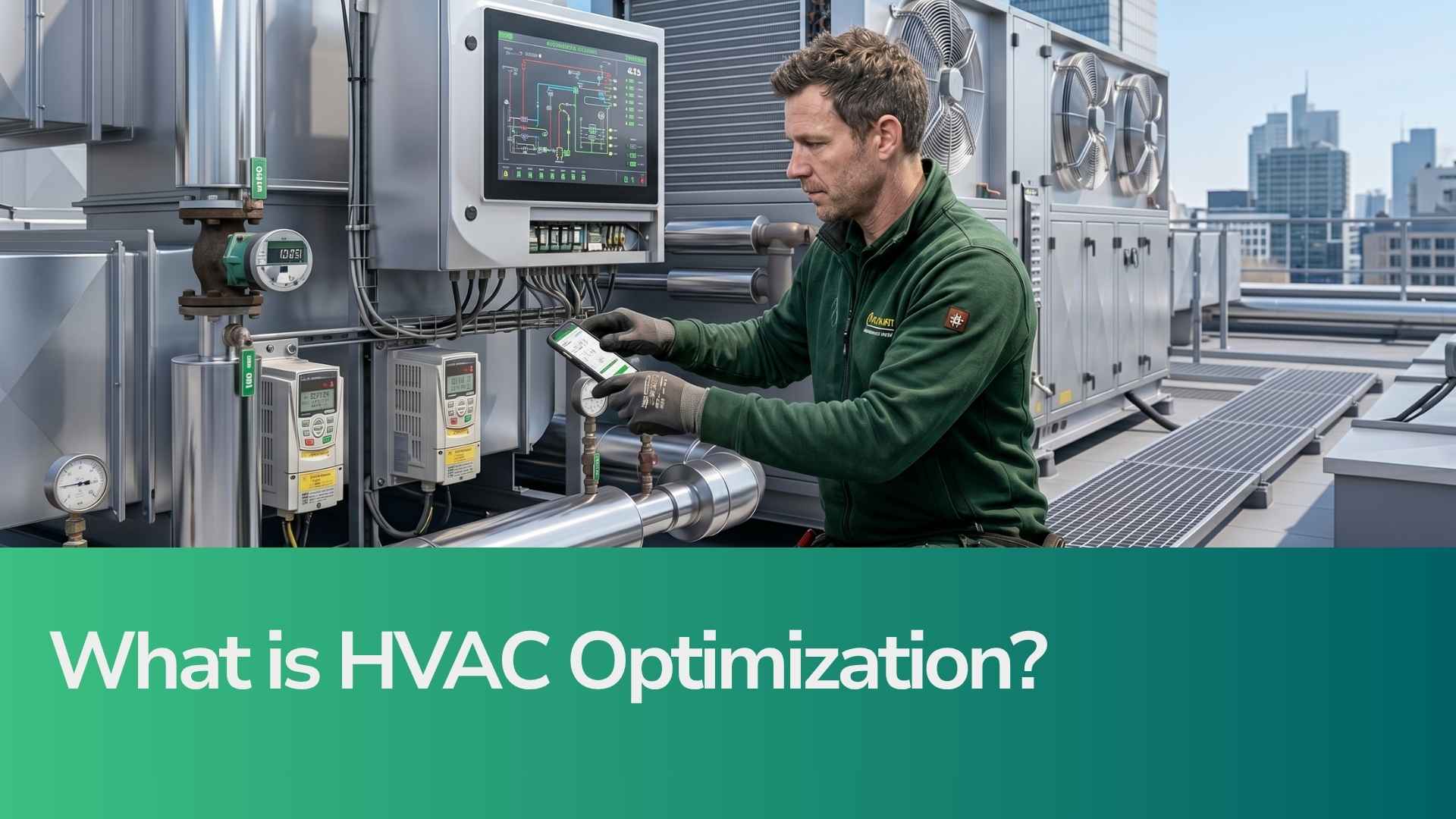
⚡ Quick Summary
HVAC optimization is the process of making a heating, ventilation, and air conditioning system run more efficiently, more consistently, and more in line with how a building is actually used, usually without new equipment or a major retrofit. Most gains come from fixing everyday operational drift, not dramatic failures.
It typically targets:
- Schedules: stopping systems from running longer than needed
- Setpoints: matching conditioning to real occupancy instead of fixed assumptions
- Ventilation: adjusting fresh air intake to demand and outdoor conditions
- Airflow and control logic: correcting dampers, valves, and sequences that misbehave
- Maintenance quality: catching small faults before they waste energy
Why it matters: In most commercial buildings the biggest losses are small, continuous issues such as a fan running too early or a zone overcooled. Left unaddressed they compound into energy waste, comfort complaints, and a heavier maintenance load.
HVAC optimization is often misunderstood.
Many people think it starts with new equipment, a major retrofit, or a complex AI project. In reality, it usually starts somewhere much simpler: systems running longer than needed, zones being conditioned when nobody is there, ventilation staying fixed regardless of demand, or comfort complaints repeating even though the equipment appears to be “working.”
At its core, HVAC optimization is the process of making a heating, ventilation, and air conditioning system operate more efficiently, more consistently, and more in line with how a building is actually used.
That may sound straightforward. In practice, it touches everything from schedules and setpoints to airflow, occupancy patterns, outdoor conditions, control logic, and maintenance quality.
In most commercial buildings, the biggest losses do not come from dramatic failures. They come from small operational issues that continue every day. A fan runs too early. A zone is overcooled because the setpoint does not match real occupancy. Fresh air is brought in at the wrong times. A valve or damper does not behave as intended, but the issue is never serious enough to trigger a major alarm.
Over time, these small problems turn into energy waste, unstable comfort, and a heavier maintenance burden.
That is where HVAC optimization matters.
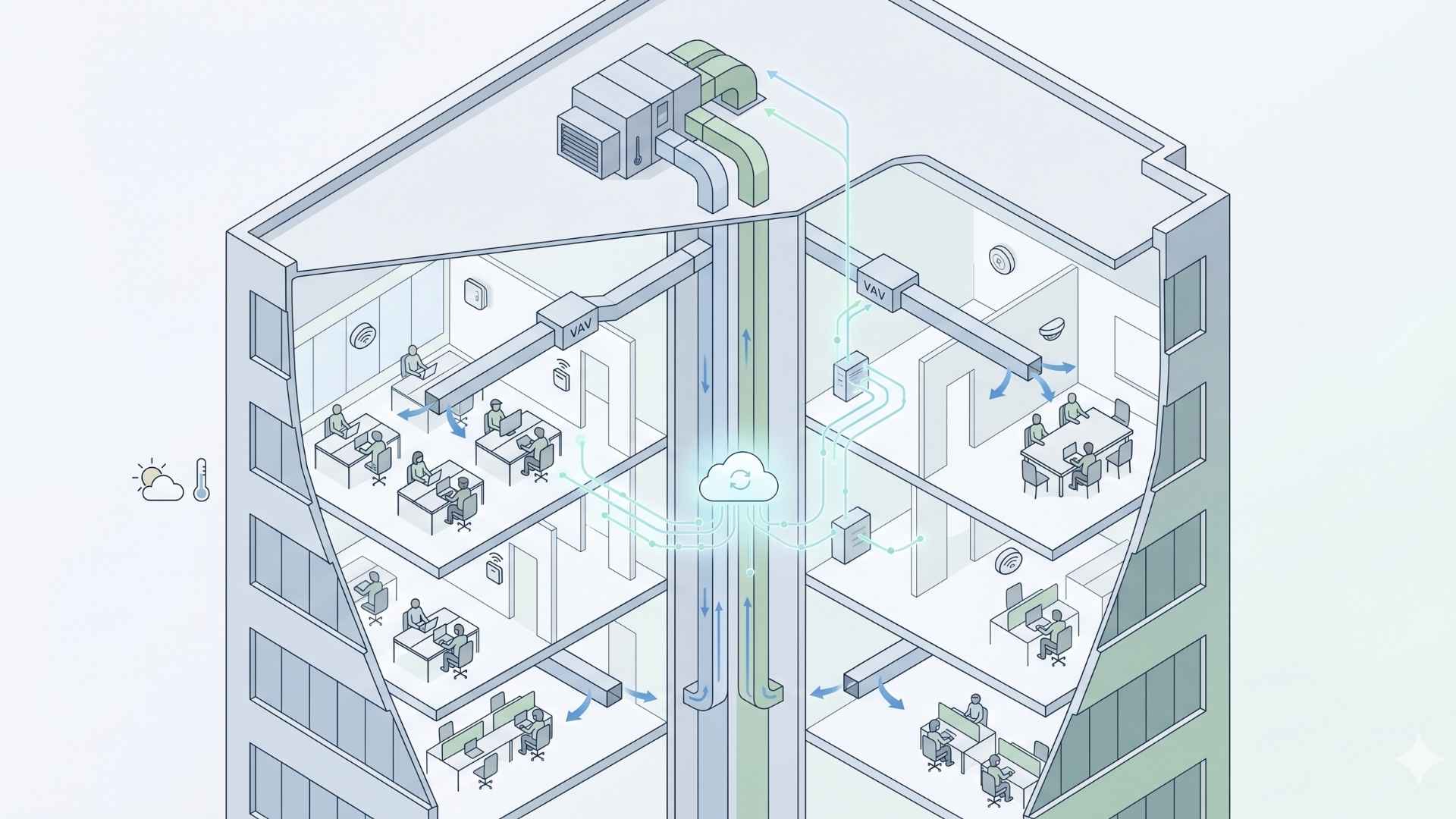
HVAC optimization is not just about energy
Energy savings are usually the first thing people associate with optimization. That is part of the story, but not the whole story.
A well-optimized HVAC system should also improve:
- occupant comfort
- operational stability
- equipment runtime
- fault visibility
- indoor air quality performance
- maintenance response
In other words, HVAC optimization is not only about reducing kilowatt-hours. It is about helping a building behave better. Tools like Sensgreen smart AC and radiator control are designed with this in mind.
This is especially important in existing buildings, where systems often evolve over time. Schedules get changed. Tenant needs shift. Zones are repurposed. New sensors may be added, but control logic stays old. The result is a system that still runs, but no longer runs intelligently.
What HVAC optimization looks like in real buildings
In real projects, HVAC optimization rarely begins with a dashboard. It usually begins with a symptom.
That symptom might be:
- “Some rooms are always too cold.”
- “The AC keeps running even when the space is empty.”
- “We have high energy use, but nobody can explain why.”
- “The building is occupied, but ventilation is not responding properly.”
- “Guests or tenants keep complaining, but there is no obvious equipment failure.”
These are not unusual cases. In fact, they are often signs of a system that is functional but poorly tuned.
A few common examples seen in the field:
1. Schedules that no longer reflect reality
A system may still follow old operating hours even though building usage has changed. This is common in offices, retail spaces, and mixed-use properties. HVAC starts too early, stops too late, or keeps running at the same intensity across the whole day.
2. One control logic applied to very different zones
Conference rooms, corridors, guest rooms, back-of-house spaces, and lobbies do not behave the same way. But many buildings still control them with overly simple logic. That leads to uneven comfort and unnecessary runtime.
3. Ventilation that stays static
Demand changes throughout the day. Occupancy changes. Outdoor conditions change. Yet ventilation settings often stay fixed. That can create wasted energy on one side and poor indoor air quality on the other.
4. Equipment that is “running” but not performing well
A fan may be on, but airflow is not where it should be. A valve may be active, but cooling response is weak. A damper may be technically open, but not behaving properly in operation. The system is alive, but not optimized.
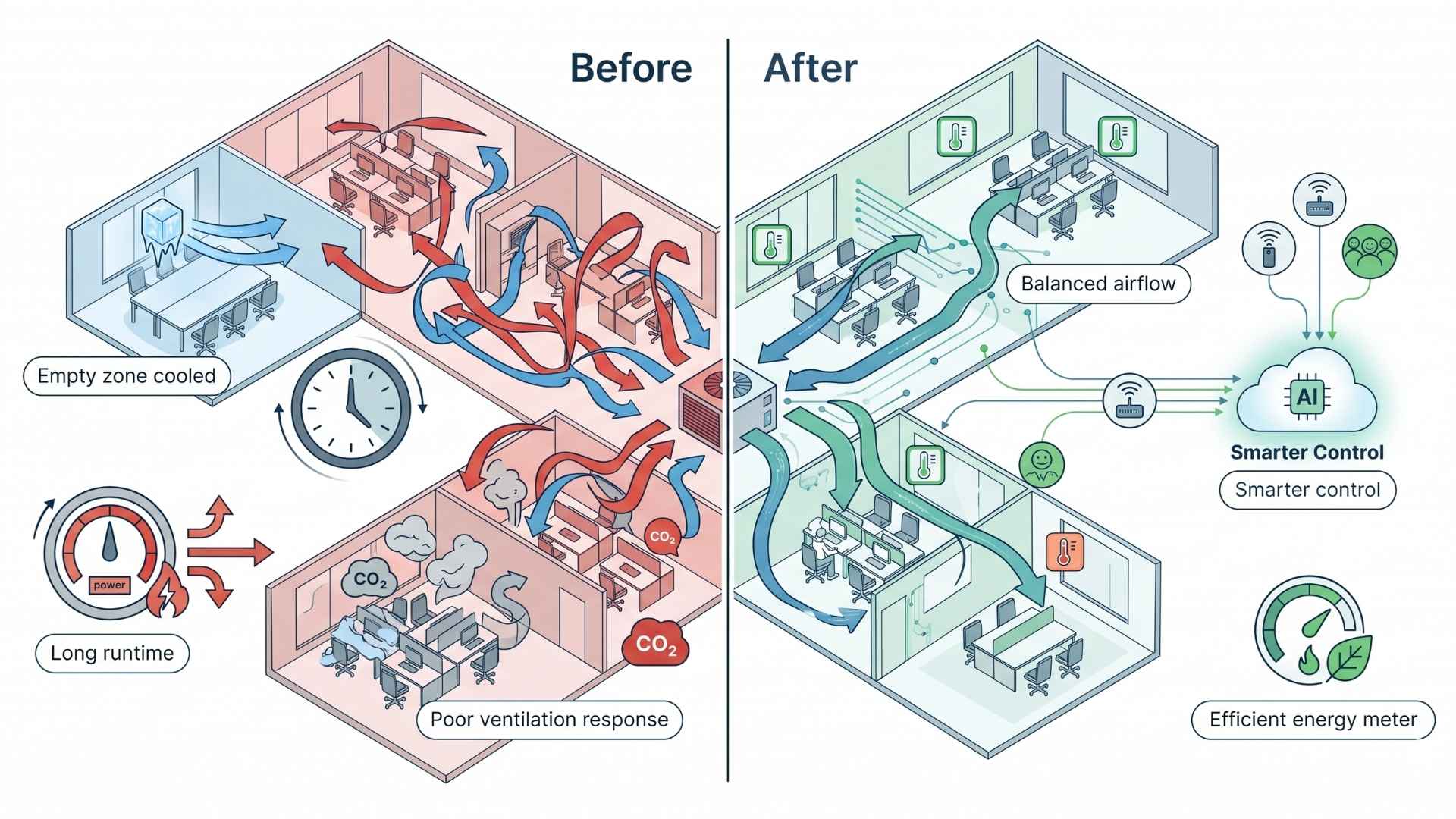
What HVAC optimization usually involves
HVAC optimization is not one action. It is a combination of operational improvements.
Depending on the building, it may include:
Schedule optimization
Making sure systems start, stop, and modulate according to real usage patterns rather than outdated assumptions.
Setpoint review
Checking whether temperature and humidity targets are realistic, consistent, and aligned with building type and occupant expectations.
Zone-level control refinement
Treating different spaces based on how they are actually used instead of applying the same strategy everywhere.
Occupancy-based control
Reducing waste by responding to whether a space is being used, rather than assuming full demand at all times. Learn more about how occupancy-based HVAC control works in practice.
Outdoor-condition response
Adjusting HVAC behavior based on weather-based HVAC optimization, temperature, or other ambient conditions.
Ventilation optimization
Balancing fresh air needs with energy performance, especially in spaces where occupancy shifts throughout the day.
Fault detection and performance review
Identifying where the system is technically active but operationally underperforming.
What good HVAC optimization does not do
It does not chase complexity for its own sake.
A common mistake is assuming that optimization means adding more software, more data, or more automation without first fixing the basics. In many buildings, quick wins come from cleaning up schedules, reviewing setpoints, and understanding zone behavior before moving to smart HVAC controls and advanced control layers.
Another mistake is focusing only on visibility. Dashboards are useful, but visibility alone is not optimization. If the system shows a problem but nobody acts on it, performance does not improve.
The goal is not to collect more graphs. The goal is to make better operating decisions.
Best practices that work in the field
There is no single formula for every building. Still, some practices consistently lead to better results.
Start with real operational behavior
Do not begin with assumptions. Begin with how the building is actually used. Compare schedules, occupancy patterns, complaints, and system behavior.
Focus on high-impact waste first
Not every inefficiency matters equally. Start with the issues that create repeated waste or repeated discomfort.
Optimize by zone, not only by building
Whole-building logic is rarely enough. HVAC performance often improves when different space types are treated differently.
Use data to support action
The best use of building data is not passive monitoring. It is identifying which decisions should change and why.
Keep control logic practical
The most effective strategies are often the ones that operations teams can understand, trust, and maintain.
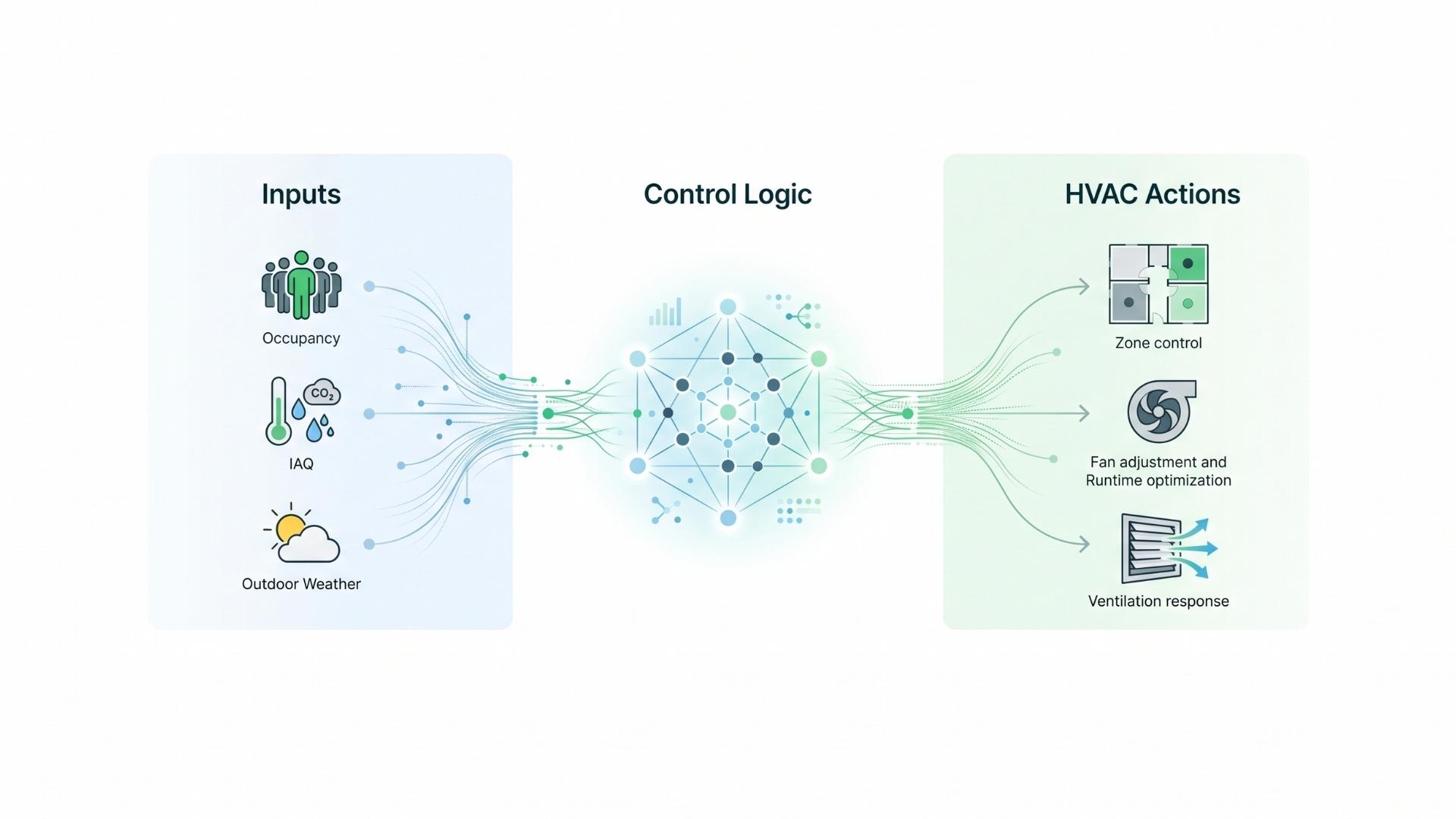
A simple way to think about HVAC optimization
A useful way to frame it is this:
HVAC optimization means helping a building deliver the right conditioning, at the right time, in the right place, with less waste and more consistency.
That includes comfort.
That includes energy.
That includes air quality.
And it includes the day-to-day reality of running a building.
Where to start
For most buildings, the first step is not a major redesign.
A practical starting point is:
- review schedules
- review setpoints
- identify high-complaint or high-runtime zones
- compare HVAC behavior with real occupancy
- check whether ventilation and airflow respond as expected
- look for repeated patterns rather than isolated events
This approach usually reveals whether the problem is scheduling, control logic, ventilation behavior, zone imbalance, or hidden performance drift.
Final thought
HVAC optimization is often framed as a technical upgrade. In reality, it is closer to an operational discipline.
It is about understanding how a building behaves, where waste is hiding, and how control decisions can be improved without making the system harder to manage.
In many cases, better HVAC performance does not begin with replacing equipment.
It begins with asking a more practical question:
Is the system working the way the building actually needs it to work?
For a structured approach to answering that question, see our building energy management guide.
